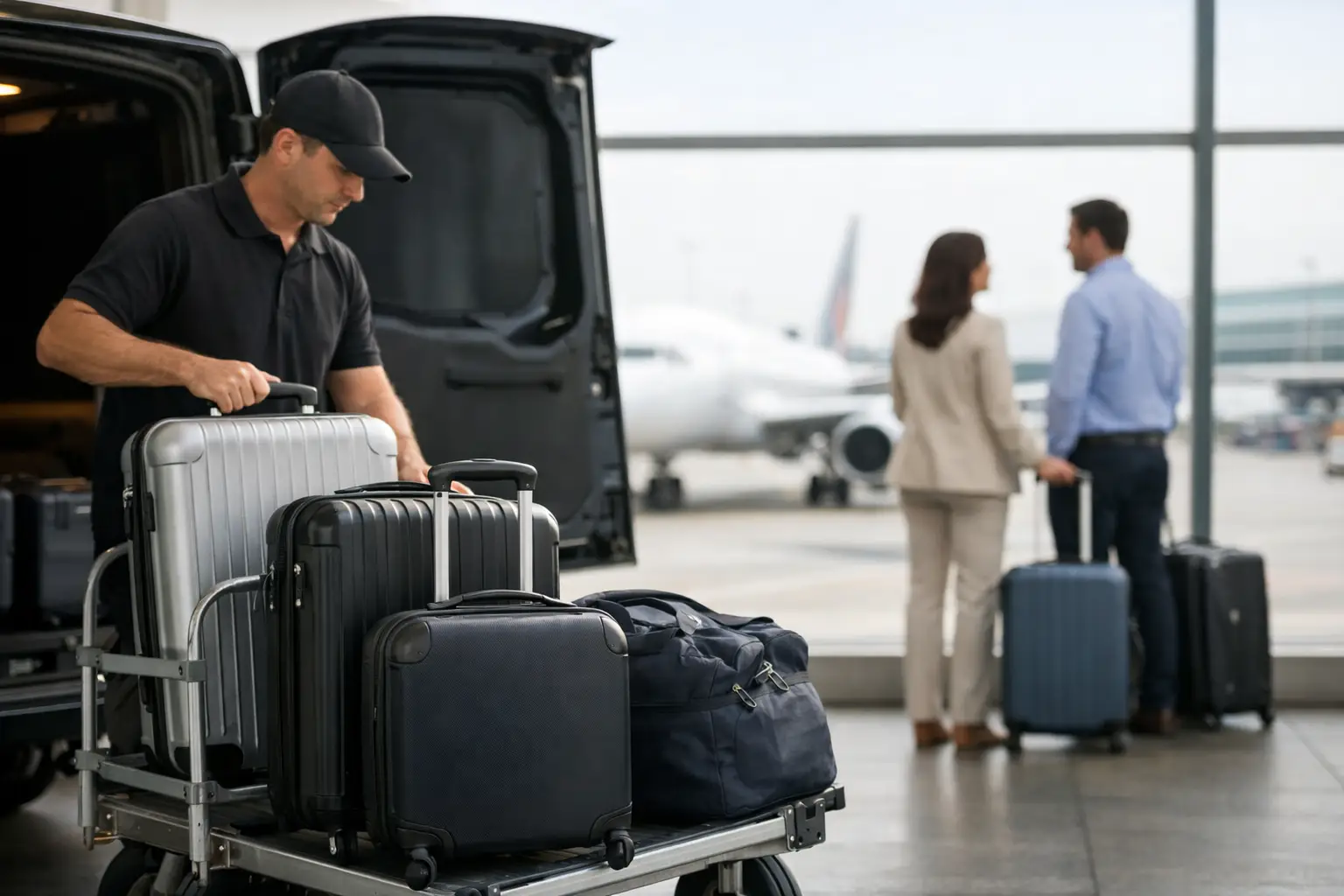
A delayed suitcase can turn a straightforward arrival into a difficult day. So can travelling with too many cases, managing equipment for an event, or trying to get bags from an airport to a student flat, hotel, home or office. An airport luggage delivery service gives you a practical alternative: your luggage is collected at an agreed point and delivered where it needs to be, while you focus on the journey ahead.
For UK travellers, families, businesses and international visitors, the value is not just avoiding heavy bags. It is having a clear plan for collection, transport and delivery when timings are tight and airport arrangements can change quickly.
When airport luggage delivery makes sense
Airport luggage delivery is useful whenever the baggage is making your journey harder than it needs to be. A family landing after a long-haul flight may prefer to travel onwards by train without pushing several trolleys through stations. A student returning with boxes and cases may need their belongings delivered to accommodation on a specific day. A business traveller may need exhibition materials, samples or work equipment taken directly to a venue.
It can also help when your travel and luggage need to move separately. Perhaps you are staying overnight near the airport before continuing elsewhere, collecting a hire car with limited boot space, or meeting someone who cannot lift or carry large cases. In these situations, a door-to-door service reduces the number of handovers you need to manage.
There is a trade-off. If you only have one small cabin bag and are travelling directly home, standard public transport or a taxi may be simpler. Delivery is most useful when baggage is bulky, valuable, numerous, time-sensitive or difficult to move through several stages of a journey.
How an airport luggage delivery service works
The process should be clear before you book. You provide the collection airport, terminal or agreed meeting point, the delivery address, the number and type of items, and the collection and delivery window. A transport provider can then assess the vehicle, handling and route required and give you an appropriate quote.
Collection may be arranged from an airport arrival area, a nearby hotel, an airport car park or another agreed location. Airport access rules differ, so a professional provider will confirm exactly where the driver can meet you and what contact arrangements are in place. Do not assume a driver can wait in any terminal area or collect directly from baggage reclaim.
Once collected, your items should be checked against the booking details, loaded securely and transported to the stated destination. The recipient should be available within the agreed time window, particularly if the luggage is being delivered to a hotel reception, serviced accommodation, workplace or shared house.
For travellers arriving late, it is worth asking whether delivery can take place the following morning. That may be more practical than arranging a late-night handover, especially where building access, concierge staff or parking restrictions are involved.
What to check before booking
Price matters, but the lowest quote is not always the most useful option. A cheap price that does not account for terminal access, waiting time, stairs or a long-distance journey can lead to avoidable changes later. Give accurate information from the start so the service can be planned properly.
Collection and delivery windows
Air travel is unpredictable. Flights can land early, arrive late, be redirected or hold passengers on the aircraft. Ask how the provider manages delays and whether waiting time is included or charged separately. You should also know who to contact if you cannot reach the meeting point at the expected time.
A realistic time window is often better than an exact minute. It gives the driver room to deal with airport traffic and gives you time to collect your bags without rushing. If delivery has a fixed deadline, such as a hotel check-in, event opening or property key collection, make this clear when requesting a quote.
Item details and handling needs
Describe every item honestly. Include the number of suitcases, approximate sizes, boxes, pushchairs, musical instruments, sports equipment and anything unusually heavy. A large hard-shell case, golf bag or boxed item may require more space than expected.
Mention fragile contents and items that need particular care. Most providers will have restrictions on hazardous goods, dangerous items and certain high-value belongings. Passports, medication, cash, irreplaceable documents and essential travel items should remain with you rather than being placed in a delivery load.
It is sensible to label each case with your name, mobile number and destination details. Take a few clear photos before handover, especially where a case already has marks or wear. This is a simple record that can prevent confusion.
Access at both ends of the journey
Airport collection is only half the job. The delivery address needs just as much attention. Tell the provider about stairs, lifts, narrow entrances, parking restrictions, gate codes, reception procedures and any time limits for loading. These details are particularly relevant for central London addresses, flats, student halls and busy commercial sites.
If someone else will receive the luggage, share their name and contact number in advance. Make sure they understand the expected delivery window and can check the items on arrival. A missed delivery can create extra waiting, storage or redelivery costs.
Choosing the right level of service
Not every luggage transfer needs the same arrangement. A single suitcase moving from an airport to a nearby hotel is different from ten cases, promotional materials and display stands heading to a conference. The right choice depends on volume, distance, urgency and the level of support you need.
For straightforward jobs, a standard scheduled collection and delivery may be the most price-conscious choice. If your flight arrives late or you have a strict onward connection, a more flexible or priority arrangement may be worth considering. For a larger load, ask whether the quote includes loading and unloading assistance, not just vehicle transport.
Businesses should also consider whether delivery proof, named contact coordination and timed arrival matter for their booking. A missed delivery to an exhibition or meeting venue can cost more than the transport itself. Clear instructions and a realistic schedule are usually more valuable than trying to save a small amount on the initial quote.
Movers Exchange helps customers compare practical transport options for airport luggage, moves, deliveries and specialist requirements, making it easier to select a service that fits the job rather than forcing every request into one fixed package.
Preparing your luggage for collection
A few minutes of preparation can make collection quicker and protect your plans if something changes. Keep your baggage grouped together before the driver arrives and remove loose straps that could catch during loading. If you have several similar cases, add a distinctive tag or label to each one.
Make a short item list for larger bookings. It does not need to be complicated: for example, four medium suitcases, two large suitcases, one pushchair and three sealed boxes. Check this list at collection and again at delivery. For business equipment, record serial numbers where appropriate and make sure equipment cases are properly closed and secured.
Use sturdy, closed luggage and well-taped boxes. Airport luggage delivery is transport, not a substitute for suitable packing. If a box contains fragile items, use internal protection and mark it clearly. Do not rely on a label alone to keep an item safe.
Keep your phone charged after landing. The driver may need to confirm your arrival, meeting point or an unexpected delay. If you will not have UK mobile data, arrange an alternative contact method before travelling or nominate a UK-based contact who can assist.
Questions worth asking before you confirm
Before accepting a quote, make sure you understand the collection point, collection window, delivery window, total price and any potential additional charges. Ask what happens if the flight is delayed, the recipient is unavailable or airport access is disrupted. It is also useful to confirm what identification or booking reference will be needed at handover.
For longer journeys, ask whether your luggage will travel directly to the destination or whether the route includes other planned collections and deliveries. Neither option is automatically wrong, but it affects expected timing and may influence the service you choose.
If you are travelling with a pet, children, mobility equipment or a tightly planned connection, say so. The luggage plan should make the rest of the journey easier, not introduce another detail for you to chase.
Make the handover part of the journey, not the problem
The best airport luggage delivery arrangements are built around clear information: accurate bag counts, realistic timings, agreed contact details and a delivery address that is ready to receive the items. That preparation gives you more freedom to leave the airport comfortably, travel onwards lightly and arrive where you need to be without luggage dictating the day.
When requesting a quote, explain the journey as it will actually happen. A provider can then match the collection, vehicle and delivery plan to your needs, helping your bags arrive safely while you get on with the more important part of travelling.