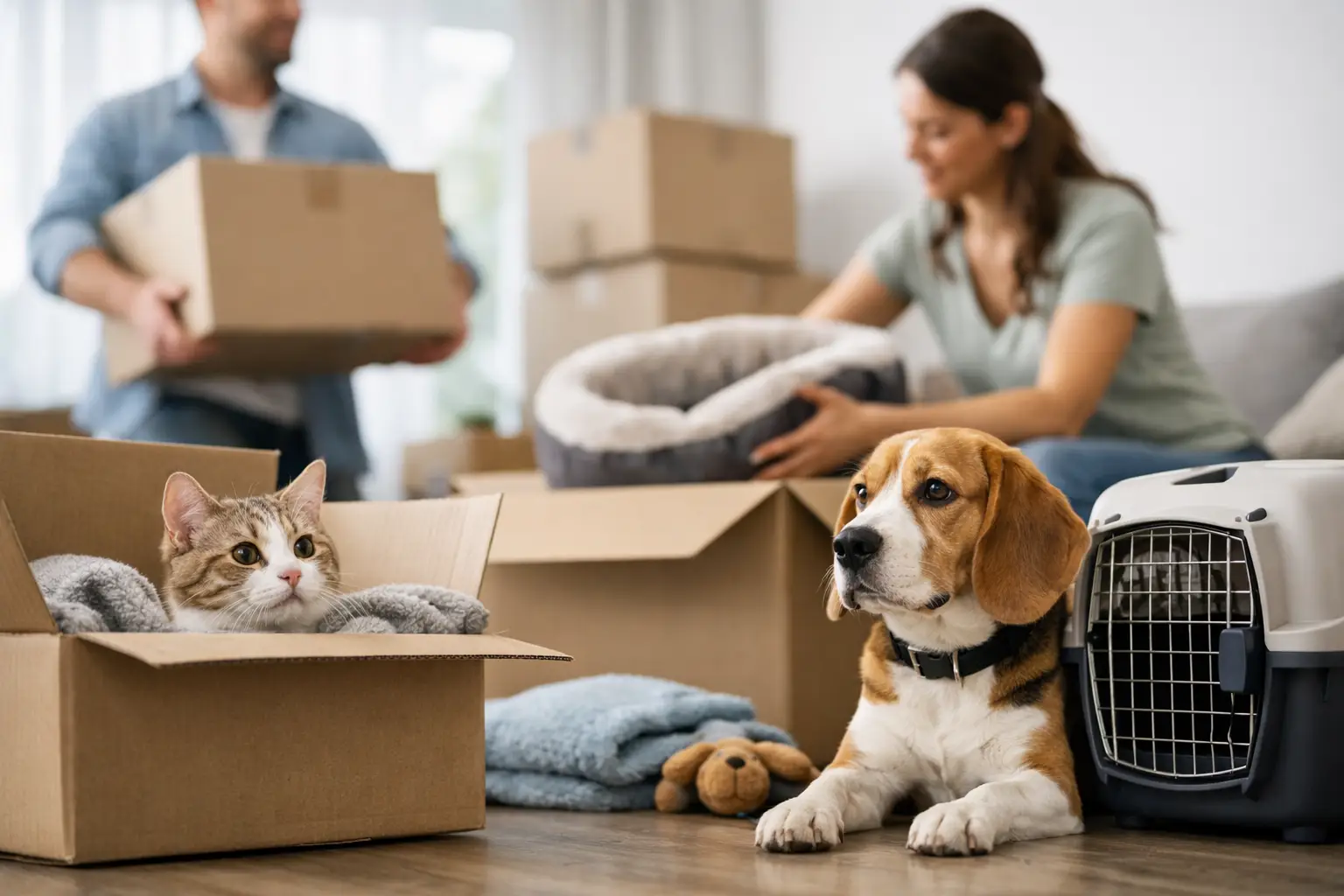
A moving date can be demanding enough without trying to answer, “How do I move my pet without upsetting them?” Pets do not understand removal schedules, key handovers or why their familiar rooms are suddenly full of boxes. They do notice changes in routine, noise and tension. A clear plan makes the journey safer and gives them the best chance of settling quickly at the other end.
Start planning your pet move before packing day
The right transport arrangement depends on your pet, the distance, the time of year and whether you are moving within the UK or overseas. A confident dog may cope well with a carefully planned car journey, while a nervous cat could need a quieter, more controlled journey with fewer stops. Small animals, birds, reptiles and fish have their own temperature, ventilation and handling needs.
Speak to your vet early if your pet is elderly, has a medical condition, takes regular medication or is particularly anxious around travel. Your vet can advise on fitness to travel, feeding, medication and any health documentation you may need. Avoid making assumptions based on a previous move with another animal. A pet’s age, temperament and health can change what is suitable.
If your relocation involves travel outside Great Britain, check the destination’s current pet travel rules well ahead of time. Requirements can include microchip records, vaccinations, treatment certificates and approved travel arrangements. Rules may also differ between countries and can take time to meet, so this is not a task to leave until moving week.
Choose transport that suits your animal
When asking, “Can someone move my pet?”, safety and welfare should be the first filters, not simply the lowest price. A suitable service should understand animal handling, provide appropriate containment and explain how collection, travel, comfort breaks and delivery will work.
For dogs and cats, secure carriers or crates are usually essential. The carrier needs enough room for the animal to stand, turn and lie down comfortably, while remaining secure during braking and corners. It should have good airflow, reliable fastenings and an absorbent lining. Let your pet get used to it in advance by leaving it open at home with familiar bedding or a favourite toy inside.
Never allow an animal to travel loose in a vehicle. Even a calm pet can panic at a new sound or movement, distract the driver or escape when a door opens. Dogs travelling by car should be safely restrained using a suitable crate, carrier or vehicle restraint. Cats and small pets should stay in a secure carrier until they are inside a closed, safe room at the new property.
Temperature matters more than many owners expect. Vehicles can become too warm or cold quickly, particularly when parked. Plan a direct route where possible, avoid leaving animals unattended and make sure the vehicle has suitable ventilation. For longer journeys, agree rest stops in advance. Dogs may need water, exercise and toilet breaks, but a cat may be safer remaining in its carrier until arrival rather than being handled in an unfamiliar location.
Prepare the essentials separately from household boxes
Your pet’s belongings should travel with them or be kept immediately accessible, not buried in the removal load. The first 24 hours are far easier when you can reach food, medication and familiar bedding without searching through labelled cartons.
Keep a pet travel bag containing food for the journey and the first day, a water bowl, lead or harness, waste bags, bedding, cleaning supplies, medication and copies of relevant veterinary records. For cats, include litter, a small tray and a scoop. For small animals, take enough of their usual food and substrate to avoid a sudden change in diet or environment.
Do not make big changes to food immediately before travel unless a vet has advised it. Familiar meals and routines can help reduce stress. Offer water regularly, but be sensible about feeding times if your pet is prone to travel sickness. Your vet can give individual guidance for this.
It also helps to update your contact details before the move. Check that microchip information, identification tags, insurance details and veterinary records show a number you can answer during moving day. A current photograph of your pet is useful to keep on your phone, just in case they become separated from you.
Keep moving day calm and controlled
The busiest part of a house move is often the worst time for pets. Doors may be open, people may be carrying furniture through hallways and the home can become unfamiliar very quickly. Even animals that normally stay close can try to hide or bolt.
Where possible, arrange for your pet to stay with a trusted friend, family member, kennel, cattery or pet sitter during packing and collection. This can be the least stressful option for a full-scale move. If they need to stay at home, set up one quiet room away from the activity. Put a clear note on the door so removal teams and visitors know not to enter.
Keep your pet’s normal routine as steady as possible. Walk your dog before the property becomes busy. Feed pets at their usual times where practical, speak calmly and avoid repeatedly checking on a nervous animal, which can sometimes add to their concern. The aim is not to make the day perfect. It is to keep the environment predictable and prevent avoidable risks.
Booking a service to move my pet
A specialist pet transport option can be useful when you do not drive, are travelling separately, have multiple animals or are managing a long-distance relocation alongside a household move. It can also reduce the pressure of coordinating pets, keys and removal teams at the same time.
Before confirming a provider, ask practical questions about the journey. Who will handle your pet? Will they travel alone or alongside other animals? What type of carrier or vehicle arrangement will be used? How are breaks, water and changes in weather managed? What happens if there is a delay? You should also be clear about collection and delivery times, access at both properties and any special instructions.
Share accurate information about your pet’s breed, size, age, temperament, health needs and behaviour around other animals. This is not about making your pet sound difficult. It helps the transport team plan the safest arrangement. A dog that is nervous around strangers, for example, may need a slower handover and familiar handling equipment.
Movers Exchange can help customers coordinate pet transport alongside wider relocation needs, so you do not have to treat every part of the move as a separate problem. Clear details from the start make it easier to match the journey to your requirements.
Help your pet settle after arrival
Arriving at a new home is not the end of the pet move. Give your animal time to adjust before expecting normal behaviour. Start with one quiet room containing familiar bedding, food, water and toys. For cats, this room should also include a litter tray placed away from food and water.
Keep external doors and windows secure. Cats, in particular, may try to return to their old territory if allowed outside too soon. Follow your vet’s guidance on when it is appropriate to let them explore outdoors, and make sure their microchip details are current first. Dogs should initially be walked on a lead, even if the area appears familiar, as new roads, gates and traffic patterns can be confusing.
Expect some temporary changes. A pet may eat less, hide more, vocalise at night or need extra reassurance for a few days. Give them calm company and a regular routine, but seek veterinary advice if you see signs of illness, prolonged distress or a marked change in behaviour.
A well-planned move protects more than your furniture and timetable. It gives your pet a calmer start in a place that will soon feel like home.