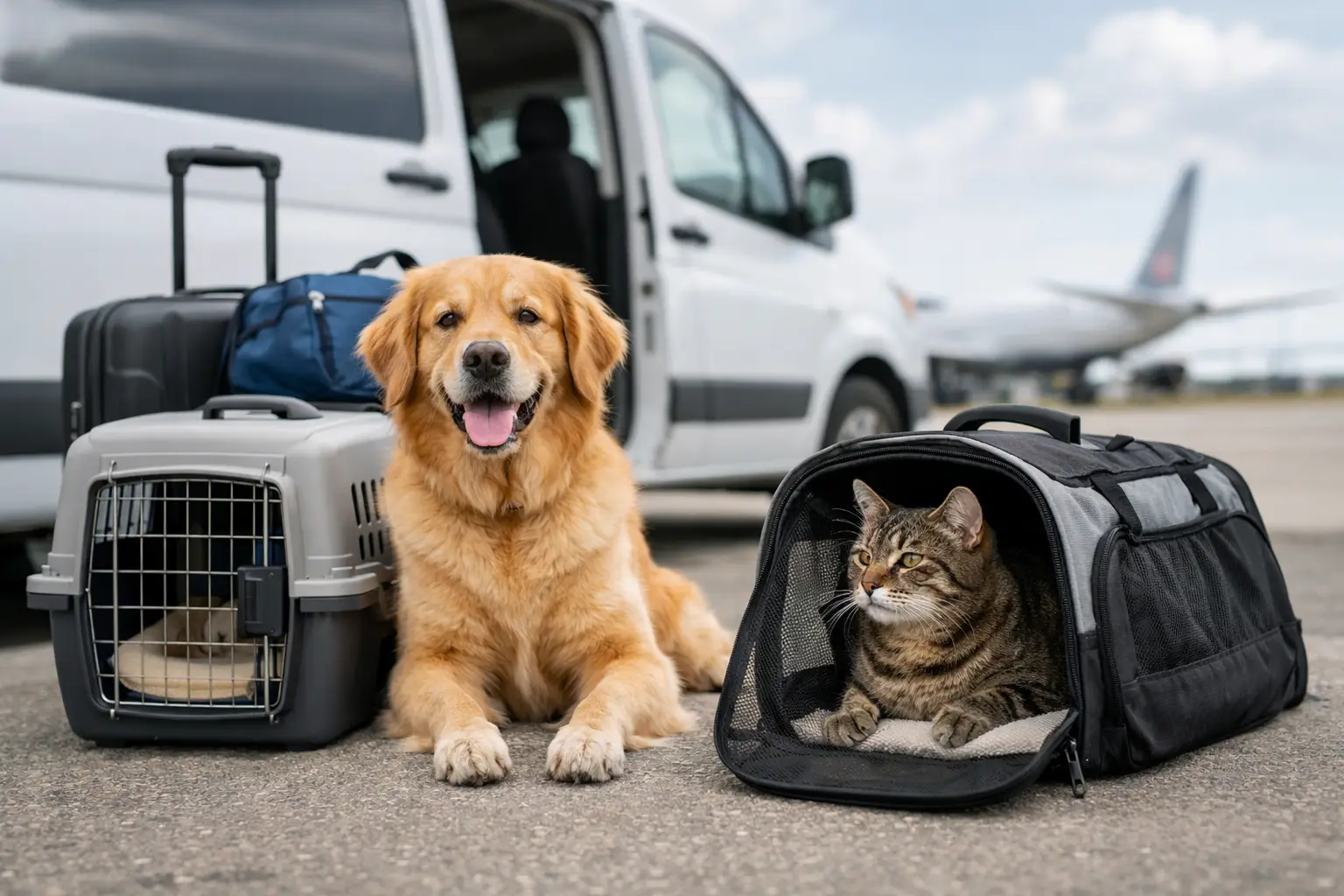
A pet’s journey is not just another collection and delivery job. Whether you are moving house, collecting a rescue animal, travelling for work or arranging a long-distance relocation, pet transport needs to fit your animal’s temperament, routine and welfare needs as well as your timetable.
The cheapest quote is not always the right choice, but neither is the most expensive. A good service is clear about how your pet will travel, who will be responsible throughout the journey and what happens if plans change. Comparing providers properly gives you a better chance of finding safe, practical transport at a fair price.
What pet transport should include
Pet transport can range from a short local trip to a multi-stop journey across the UK. The right arrangement depends on the animal, distance, collection and delivery locations, and whether your pet can travel alone comfortably.
For a straightforward journey, a specialist driver may collect your pet from your home and deliver them directly to the new address. Longer routes may involve planned comfort breaks, feeding arrangements and overnight care. Some customers need a shared route, where more than one animal travels in a vehicle, while others prefer a dedicated vehicle for a direct journey.
Ask the provider exactly what is included in their quote. Collection and delivery times, travel crate provision, updates during the journey, food and water arrangements, motorway charges and waiting time can all affect the final cost. A low initial price can become less attractive if essential parts of the journey are added later as extras.
Choosing a pet transport provider with care
A reliable provider should be happy to explain their process in plain language. You do not need to be an expert in animal transport, but you should come away knowing how your pet will be contained, monitored and handed over.
Start with the vehicle. It should be clean, appropriately ventilated and set up to keep animals secure during travel. Dogs and cats usually need a suitable crate or carrier that allows them to stand, turn and lie down comfortably. The carrier should be secured, rather than left loose in the vehicle. For rabbits, birds and other small animals, safe temperature control and protection from noise or draughts can be especially important.
Then ask about the journey itself. A driver should be able to discuss likely timings, planned stops and how they manage delays caused by traffic, road closures or poor weather. For a nervous animal, a direct route may be worth paying more for. For a relaxed pet on a longer journey, carefully planned breaks and a well-managed shared service may offer better value.
It is also sensible to check that the business has suitable insurance and any relevant animal transport authorisation for the work it carries out. Requirements can differ according to the type of animal and journey, so ask what applies to your booking rather than relying on a vague assurance. A professional provider will not see these questions as difficult.
Questions worth asking before you book
You can get a clearer picture quickly by asking how many animals will travel in the vehicle, whether your pet will be transported alone or with others, and who will be driving. Confirm the collection window, estimated arrival time and what contact you will have while your pet is on the road.
Also ask what information the provider needs from you. They should want to know about your pet’s age, breed, size, health, behaviour around people and other animals, feeding routine, medication and any mobility issues. If nobody asks about these details, they may not be planning the journey with enough care.
How to compare pet transport quotes fairly
A useful quote comparison starts with the same brief. If one provider is quoting for a shared journey and another is quoting for exclusive transport, the prices will naturally be different. The goal is not simply to find the lowest figure. It is to compare like for like.
Give each provider the collection postcode, delivery postcode, preferred dates, pet type, size and number of animals. Include whether you need help getting a carrier into a flat, whether there are stairs or restricted parking, and whether collection or delivery must happen within a narrow time window. These details can affect staffing, route planning and cost.
When quotes arrive, look beyond the headline total. Check whether VAT is included, whether the collection time is fixed or estimated, and whether the booking is refundable if your plans change. Find out how much notice is needed for cancellation or rescheduling. A provider that costs slightly more but offers clear communication and a realistic schedule can be the better choice.
MoversExchange helps customers request and compare quotes from transport providers in one place, reducing the need to ring around while trying to manage a move or relocation. Use the information in each response to compare the service level as well as the price.
Preparing your pet for travel day
Good preparation makes the handover easier for everyone, especially the animal. Keep your pet’s normal routine as steady as possible in the days before travel. A sudden rush, unfamiliar people and packed boxes can be unsettling, so set aside a quiet area where they can rest before collection.
Make sure your pet is wearing an identification tag with up-to-date contact details where appropriate. For dogs and cats, have microchip information available and check that your registered details are current. Send the driver the best contact number for collection and delivery, plus a second number in case you are unreachable.
Pack a small travel bag containing enough food for the journey and a little extra in case of delay. Include written feeding instructions, any medication in its original packaging, a lead or harness if relevant, waste bags, a familiar blanket and veterinary contact details. Familiar scents can be reassuring, but avoid packing prized toys that could create a choking or damage risk in the carrier.
Feeding needs vary. Many pets travel more comfortably without a large meal immediately beforehand, but you should follow advice suited to your individual animal. If your pet has a medical condition, is very young, elderly, pregnant or recovering from treatment, speak to your vet before confirming travel. Do not sedate an animal for transport unless a vet has specifically advised it.
Handover without stress
At collection, give the driver a concise written note covering feeding, medication, toilet breaks and any triggers or handling preferences. Be honest about behaviour. A dog that pulls when startled, a cat that panics around unfamiliar animals or a rabbit that is sensitive to heat can still travel safely when the driver knows in advance.
Keep goodbyes calm. A long, emotional farewell can make some pets more anxious. Once your pet is secure in the vehicle, let the driver begin the journey and wait for the agreed update rather than repeatedly calling while they are driving.
When a shared journey is suitable
Shared pet transport can be a cost-effective option, particularly when your dates are flexible and your animal is accustomed to travel. Providers can group compatible routes, which may reduce the price compared with a dedicated vehicle. The trade-off is that collection and delivery windows can be wider, and the journey may take longer because of other stops.
A dedicated service is often a better fit for highly anxious pets, animals with health needs, pets travelling with a large amount of essential equipment, or customers who need a precise collection and delivery time. It can also be preferable when an animal should not travel close to unfamiliar pets.
Neither option is automatically better. The right choice comes down to welfare, timing and budget. Be clear about your priorities when requesting quotes, rather than assuming every transport service works the same way.
Moving home with pets
If pet transport is part of a house move, plan it separately from the removal van. A busy loading day is usually noisy, with doors open and people carrying furniture in and out. Keeping a pet in the middle of that activity increases the risk of escape and stress.
Arrange for your pet to travel before the heaviest part of the move begins, or place them in a quiet, secure room until collection. At the new property, prepare one safe room before they arrive. Set up water, bedding, food and a familiar item, then allow them time to settle before introducing them to the rest of the home.
For cats in particular, do not assume they will feel at home immediately. Keep them indoors until they are settled and follow veterinary advice on when it is safe to let them explore outside. A careful first day can prevent a frightening escape in an unfamiliar area.
The best pet transport booking leaves no one guessing. Share accurate information, compare the service behind each quote and choose a provider who treats your pet as an individual traveller. That preparation gives you space to focus on the move ahead while your companion gets the calm, considered journey they deserve.