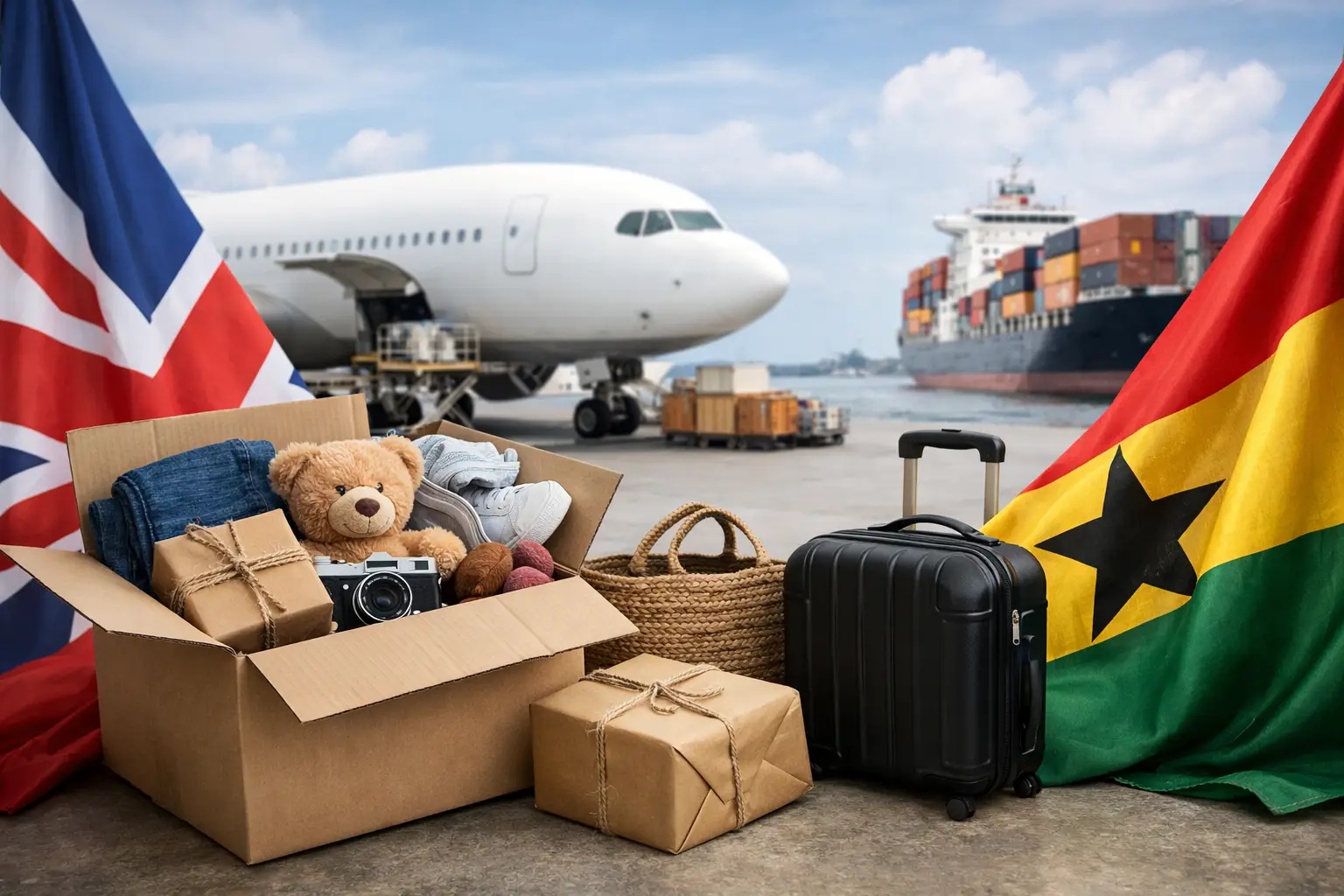
A suitcase left after a family visit, boxes of clothes for relatives, or a few pieces of furniture for a new home can quickly become a bigger job than expected. When you need to send personal items to Ghana from the UK, the right preparation makes the difference between a straightforward delivery and a frustrating delay. The priority is not simply finding transport. It is choosing a service that suits the size, value and urgency of what you are sending, then giving the shipment the information it needs to travel properly.
Start with what you are sending
Personal items can range from a small carton of clothing to several suitcases, household goods or bulky furniture. Before requesting a quote, make a clear inventory of every item. This helps a transport provider assess the right vehicle, route and handling requirements, while also giving you the detail needed for customs paperwork.
Be specific rather than writing broad descriptions such as “personal effects”. A better description would be “used men's clothing”, “one used laptop for personal use”, “kitchen utensils”, or “two flat-pack bedside tables”. Include the number of packages, approximate dimensions, weight and whether anything is fragile, valuable or unusually shaped.
The service you choose will depend on the shipment. A small, time-sensitive parcel may suit an express courier option. Several boxes or suitcases can be more practical as a consolidated shipment. Furniture, larger household items and multiple packages may need a collection service with dedicated transport or freight arrangements. Sending everything in one well-planned consignment can be easier to manage than arranging several separate deliveries, although it may not be the quickest option.
Check what can and cannot be sent to Ghana
Do this before packing, not at the collection point. International transport is subject to carrier rules and customs controls, and restrictions can change. Items commonly requiring extra checks include electronics, medicines, food, liquids, batteries, cosmetics, valuables and anything made from animal or plant materials.
Avoid placing cash, illegal drugs, weapons, counterfeit goods, flammable products or dangerous chemicals in a shipment. Power banks and other lithium-battery items can be restricted, particularly when packed separately. If you are unsure about an item, declare it during the quote process and ask whether it can travel on the selected service.
Personal belongings are not automatically free from duties or taxes. Ghanaian customs may assess charges based on the type, condition and declared value of the goods. Used items should be described honestly as used, but they still need a realistic value for customs purposes. Under-declaring goods may feel like a saving at first, but it can lead to delays, reassessment, penalties or a held shipment.
Keep proof of value where possible
For newer, high-value or electronic items, keep receipts, purchase confirmations or a simple written estimate of current used value. These documents can be useful if customs asks for clarification or if you need to make a claim following loss or damage. They also help distinguish an occasional personal shipment from goods intended for resale.
Pack for handling, storage and onward travel
A box may pass through more than one depot, vehicle and handling team before reaching its destination. Pack for that reality. Use strong double-walled cartons for heavier goods, and do not overload them. A box that is difficult to lift is more likely to split or be damaged during handling.
Wrap fragile items individually with suitable protective material and fill empty space so contents cannot move around. Plates, glassware and small appliances should be cushioned on every side. For furniture, protect corners, remove loose parts where practical and keep screws or fittings together in a labelled bag secured to the item.
Clothing, bedding and soft furnishings can be packed in cartons, woven bags or strong luggage, depending on the service. Vacuum bags save room, but they should go inside a protective outer package rather than travel alone. Seal each box properly, then label it with the sender’s name and UK contact number, the recipient’s full name, Ghanaian contact number, destination address and a package number such as “Box 2 of 6”. Put a duplicate address label inside the package as a useful backup.
Prepare the details customs and delivery teams need
An accurate consignment is easier to clear and easier to deliver. You will normally need the sender’s and recipient’s full details, including phone numbers and addresses. The recipient should know that the shipment is coming and be ready to respond if a carrier or customs representative needs confirmation, identification or payment of any assessed charges.
Ghana addresses can vary in format, so add clear local directions where needed. Include the town or city, area, street or landmark, and GhanaPost GPS digital address if the recipient has one. A working local phone number is especially valuable when final delivery requires an appointment or directions.
Your item list should match the contents of the boxes. If you send six packages, number them clearly and make sure the inventory identifies which items are in each one. This is useful for customs checks and for your own peace of mind if the consignment is split during transit.
Choose a delivery option that matches your priorities
The cheapest quote is not always the best value, and the fastest service is not always necessary. Start by deciding what matters most: speed, budget, collection convenience, tracking, careful handling or delivery to a specific address.
For urgent luggage, documents or a small package, an express option may justify the higher cost. For non-urgent clothing, household goods or several boxes, a consolidated service can be more cost-effective because space is shared with other shipments. The trade-off is that departure and delivery dates may be less flexible.
Bulky items need a different conversation. A sofa, bed frame, appliances or multiple pieces of furniture may require collection from a UK property, protective wrapping, loading support and a planned delivery arrangement in Ghana. Measure doorways, stairwells and access points at both ends before booking. An item that fits into a lorry may still be difficult to collect from a third-floor flat or deliver to a property with limited access.
Movers Exchange can help customers compare suitable transport options for possessions travelling from the UK to Ghana, helping make collection, handling and delivery requirements clearer before work begins.
Ask what the quote includes
A useful quote should state whether collection is included, how pricing is calculated, the expected transit window and whether customs charges are included or payable separately. Check the level of tracking available and what happens if the recipient is unavailable. If you are sending fragile or valuable goods, ask about declared-value cover and the claims process rather than assuming standard compensation will cover the full replacement cost.
Avoid the mistakes that cause avoidable delays
Most issues come down to incomplete information, unsuitable packing or unrealistic expectations. Do not wait until collection day to mention an extra box, a large television or a battery-powered item. Changes can alter the vehicle requirement, price or whether the item can be accepted at all.
Likewise, do not rely on a recipient who is difficult to contact. Confirm their phone number shortly before dispatch, tell them the approximate arrival period and make sure they understand that customs may contact them directly. If you are sending items to someone moving into a new property, check that the address is complete and that there is a safe place to receive the goods.
Keep copies of your inventory, booking confirmation, photographs of packed items and any proof of value. Photographs are particularly useful for furniture and electronics, as they record condition before collection. This takes only a few minutes and gives you a clear record if questions arise later.
Plan ahead, then send with confidence
International delivery works best when the sender, recipient and transport provider all have the same information from the beginning. Give yourself time to sort, measure, pack and document the items properly, especially if you are sending household goods or arranging collection from a busy home.
A clear inventory, honest values, strong packing and a reachable recipient will do more for a successful delivery than last-minute shortcuts. Once those basics are in place, sending personal belongings to Ghana becomes a practical task you can manage with far more control.